Source Pet Kennel for Chicken Rabbit and Dog Breeding
Compare 30 pet kennel options for small pets including dogs, rabbits, and birds. Buyers can evaluate steel and fabric models with varying sizes, customization, and MOQs from suppliers in China.
Key considerations
Products List




Comprehensive Sourcing Guide
Strategic Sourcing Guide for Pet Kennel Procurement
The global demand for specialized animal housing has driven a robust market for pet kennels, ranging from heavy-duty steel structures for commercial breeding to lightweight fabric enclosures for domestic use. For procurement professionals, navigating this category requires a granular understanding of material composition, structural specifications, and compliance frameworks. The following guide synthesizes observed market data and technical attributes to provide a disciplined approach to sourcing pet kennels, ensuring that buyers can evaluate suppliers based on verifiable facts rather than marketing claims.
Technical Specifications and Material Composition
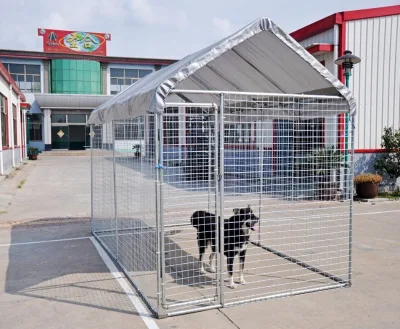
The foundation of a reliable pet kennel lies in its material integrity and dimensional accuracy. In the current market, steel remains the dominant material for permanent or semi-permanent structures, specifically utilizing Q235 raw material which offers a balance of strength and weldability. For commercial-grade applications, the wire diameter is a critical specification; observed data indicates a standard wire diameter of 3.5mm, which provides sufficient rigidity to withstand the pressure of larger animals while maintaining visibility. The mesh opening is equally significant for safety and containment; a standard configuration of 50x100mm is frequently observed, designed to prevent escape while allowing adequate airflow.
Structural stability is often determined by the frame construction. High-quality units utilize a 25x25mm square frame with a wall thickness of 1.5mm. This dimensioning ensures the kennel can support the weight of the mesh and resist deformation under load. The finishing process is equally vital for longevity. Powder coating is the preferred surface treatment for steel kennels, providing a durable barrier against corrosion and rust. This process, combined with the raw material quality, contributes to the advertised advantage of a long service life, particularly in outdoor environments exposed to varying weather conditions.
In contrast to steel structures, the market also features fabric-based kennels. These units, often categorized as "Dog Houses" or "Pet Houses," utilize fabric materials that are distinct from metal counterparts. These products often feature removable covers and are designed for portability. The dimensions for these fabric units vary significantly, with specific models citing standard heights of 48cm and widths of 30cm, or offering size ranges including Small, Medium, and Large. Buyers must distinguish between these two distinct categories when defining technical requirements, as the performance characteristics of steel and fabric are not interchangeable.
Compliance, Certification, and Safety Standards
When sourcing pet kennels, verifying compliance with international and regional standards is essential for risk mitigation. The market data indicates that certain steel kennel models are associated with ASTM certification. While the presence of this certification suggests adherence to specific material and safety benchmarks, buyers must verify the scope of this certification for each specific SKU. ASTM standards often cover aspects of material strength and safety, but they do not automatically guarantee suitability for all animal types or environmental conditions.
Beyond specific certifications, buyers should scrutinize the "Standard" designation provided by suppliers. Some listings reference a "Standard" classification, while others provide specific dimensional standards, such as 9.5x9.5x6ft for certain steel models. These dimensional standards serve as a baseline for production consistency. It is crucial to note that not all products in the category carry the same level of certification. For instance, fabric kennels may not carry the same ASTM designation as their steel counterparts, relying instead on general quality assurances. Procurement teams must request documentation to confirm that the specific model being purchased meets the necessary safety requirements for the intended animal species, whether it be dogs, chickens, rabbits, or birds.
Cost Drivers and Pricing Dynamics
The pricing structure for pet kennels is influenced by a complex interplay of material costs, manufacturing processes, and order volume. The observed price range in the market spans from $3.90 to $1,199.00 USD. This wide variance reflects the dichotomy between simple, small-scale fabric enclosures and large, custom-built steel structures. The lower end of the spectrum typically corresponds to fabric-based items with minimal framing, while the upper end includes heavy-duty steel kennels with extensive powder coating and custom dimensions.
Minimum Order Quantity (MOQ) is a primary driver of unit cost. The market exhibits a broad MOQ range from 1 unit to 1,000 units. However, specific high-volume steel models often carry an MOQ of 100 sets, which can significantly impact the total cost of ownership for smaller buyers. Conversely, fabric-based items may have a lower entry barrier with an MOQ of 10 pieces. Buyers must calculate the total landed cost, including the MOQ requirement, to determine the most economical procurement strategy. Additionally, the customization factor plays a role in pricing; while customization is available for many steel models, the process of tailoring dimensions or finishes will invariably increase the unit cost compared to standard off-the-shelf inventory.
Typical Applications and Usage Scenarios
Pet kennels serve diverse applications across different sectors, from residential pet ownership to commercial animal breeding and agriculture. The observed usage data highlights a broad suitability for various species, including dogs, chickens, rabbits, and birds. This versatility suggests that the design parameters of these kennels are adaptable to different animal sizes and behaviors.
For commercial breeding operations, the "Feeding" and "Breeding" classifications are particularly relevant. These kennels are designed to facilitate easy cleaning and monitoring, with features like powder-coated frames that resist corrosion from animal waste. The "All Seasons" designation for steel kennels indicates their suitability for year-round outdoor use, making them ideal for farms or kennels in climates with temperature fluctuations. In contrast, fabric kennels are often marked for "Spring & Autumn" use or specific indoor applications, with some models explicitly noted as "Not Waterproof." This distinction is critical for buyers planning to house animals in outdoor environments where rain and humidity are constant factors.
The "Small Pets Animals" suitability tag further refines the application scope. While some large steel kennels are robust enough for adult dogs, smaller fabric models are optimized for puppies or small breeds. Buyers must align the product type with the specific animal to ensure safety and comfort. The "Dog House" and "Pet House" nomenclature often implies a more domestic, aesthetic focus, whereas "Feeding" and "Breeding" tags suggest a functional, industrial approach.
Supplier Evaluation and Operational Logistics
Evaluating suppliers requires a focus on their logistical capabilities and production consistency. The origin of these products is predominantly China, with specific manufacturing hubs noted in Anping. This regional concentration suggests a mature supply chain with established expertise in wire mesh and metal fabrication. Buyers should verify the supplier's ability to meet the "Standard" production requirements and their capacity to handle the specific "prod_model" numbers observed in the market, such as XMN0830 or XMN1202.
Packing and transportation methods are critical components of the supplier evaluation. Steel kennels are typically shipped on pallets or in bulk, a method that optimizes space but requires careful handling to prevent damage to the powder coating. Fabric kennels, on the other hand, are often packed in nylon bags or cartons, with specific quantities like 200 pieces per carton. The "Transportation" method, often listed as "Air," and the associated "Time" of 7-10 days, indicates a reliance on expedited shipping for certain orders. Buyers must assess whether these lead times align with their inventory planning and whether the packaging is sufficient to protect the product during transit.
Furthermore, the availability of customization is a key differentiator. While some models are "Non-Customized," others offer tailored solutions. Suppliers capable of handling custom orders must demonstrate flexibility in their production lines. The "Condition" of the products is consistently listed as "New," which is a baseline expectation, but buyers should confirm that "New" implies factory-fresh inventory rather than refurbished stock.
Quality Control and Long-Term Procurement Considerations
Ensuring long-term value from pet kennel procurement involves rigorous quality control measures. The "Advantage" of a "Long Service Life" is a claim that must be validated through physical inspection of the frame thickness, wire diameter, and coating quality. Buyers should prioritize suppliers who can provide evidence of the powder coating process, as this is the primary defense against rust and degradation. The use of Q235 raw material is a positive indicator, but the consistency of this material across batches must be verified.
For long-term procurement, the availability of spare parts or replacement components is a consideration, particularly for modular steel structures. The "Tiers" of pricing, observed as a single tier in some listings, suggests a straightforward pricing model, but buyers should remain vigilant for hidden costs related to customization or expedited shipping. The "Brand" presence, such as "Happydoggy," can indicate a level of market recognition, but buyers should not rely solely on brand names without verifying the underlying product specifications.
Finally, the "Season" suitability must be re-evaluated periodically as climate patterns change. A kennel marked for "All Seasons" should be inspected annually for signs of wear, particularly in the mesh and frame connections. By maintaining a disciplined approach to specification verification and supplier evaluation, buyers can secure pet kennels that meet their operational needs while minimizing the risk of premature failure or non-compliance. The integration of these technical, logistical, and quality factors ensures a robust sourcing strategy for the pet kennel category.
FAQs
What materials are used for steel pet kennels?
Steel pet kennels are constructed using Q235 raw material with a wire diameter of 3.5mm. The frame typically measures 25x25mm with a 1.5mm wall thickness and features a powder-coated finish for durability.
Which certifications apply to metal dog kennels?
Certain steel kennel models carry ASTM certification to verify material and safety benchmarks. Buyers must confirm the specific scope of this certification for each SKU to ensure compliance with intended animal types.
How long is the lead time for air transport?
The typical lead time for air transportation is 7 to 10 days. This duration applies to specific fabric-based models and requires verification against the supplier's current production capacity and shipping schedule.
Can I customize the dimensions of the kennel?
Customization is available for many steel models to tailor dimensions or finishes. However, some fabric-based items are listed as non-customized, so buyers must verify the specific model's flexibility before ordering.
What is the minimum order quantity for steel units?
High-volume steel models often require a minimum order quantity of 100 sets. In contrast, fabric-based kennels may have a lower entry barrier with an MOQ of just 10 pieces.
Where are these pet kennels manufactured?
The products originate from China, with specific manufacturing hubs noted in Anping. This regional concentration suggests a mature supply chain with established expertise in wire mesh and metal fabrication.
Which animals are suitable for these kennels?
These kennels are suitable for dogs, chickens, rabbits, and birds. The design parameters are adaptable to different animal sizes, with specific models optimized for small pets or commercial breeding operations.